
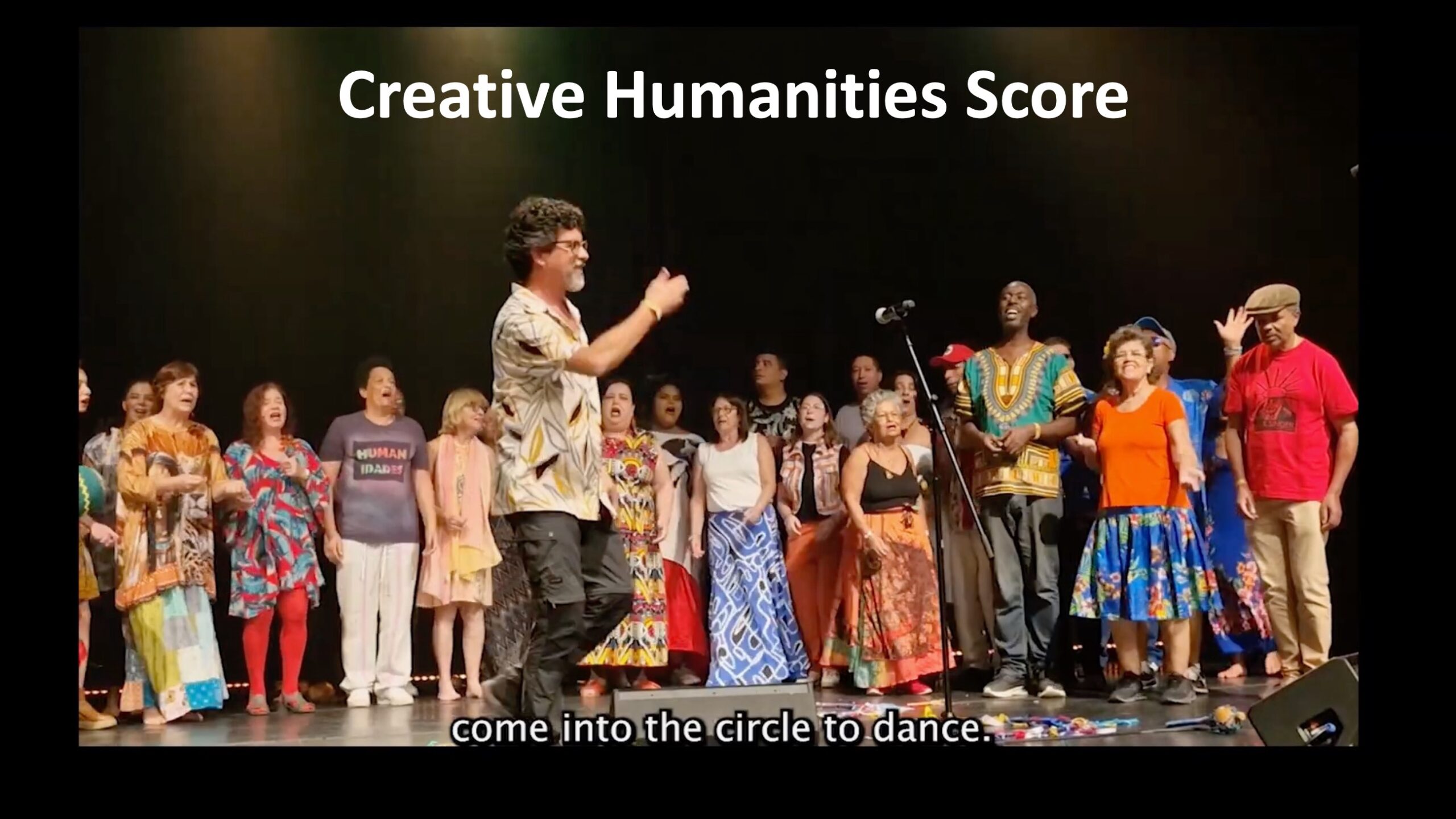
Creative Humanities Score (Cidadãos Cantantes Scenic Choir)
Documentary
2025 Brazil
104 min
Language: Portugues
Subtitles in English
Documentary Director: Renato Celso Kraté Maldos
Artistic Director: Psychologist – Isabel Cristina Lopes (Cris Lopes)
Musical Director: Conductor – Julio Cezar Giudice Maluf
Performance Director: Rebeca Lopes Maluf
Short synopsis
Score of Creative Humanities is a documentary exploring a Brazilian cultural initiative that unites diverse participants through collective singing and artistic expression. Emerging from São Paulo’s cultural movements, the project uses music and performance to promote social inclusion, mental health awareness, people’s power, and human rights.
By challenging traditional psychiatric models, it emphasizes demedicalization and the empowerment of marginalized communities. The film presents art as a transformative force that builds empathy, connection, and shared identity in a diverse group.
Through personal stories and community engagement, the documentary highlights the life-changing impact of the project, ultimately portraying art and culture as powerful practices for both personal growth and social change.
Summary
The documentary presents the project Creative Humanities Score, developed in Brazil over the past 34 years. It introduces us to a diverse group of participants—artists, professionals, and community members—who come together through music, culture, and art to retell the history of the world.
The project explores how the world can be transformed when culture and artistic expression are integrated into social and mental health practices. It highlights the important role that art has played, and continues to play, in mental health—serving as a bridge against violence and intolerance, and fostering empathy and human connection.
Over the past decades the Coral Cênico Cidadãos Cantantes has contributed to movements advocating for demedicalization, deinstitutionalization, decolonization and the recognition of the rights of marginalized groups, including women and indigenous and black communities. At its core, the project challenges how society defines and stigmatizes people experiencing mental distress. Instead of labeling or isolating them, it promotes integration through shared creative experiences.
Originating as a pioneering cultural movement in the 1990s in São Paulo, it has since gained support from public institutions and local communities. The work combines music, theater, and collective performance (“canto scenic”) in heterogeneous groups, emphasizing autonomy and collaboration.The philosophy goes beyond viewing art as merely therapeutic or entertaining—it positions art as a force for life transformation and social change. The mission is to amplify diverse and “dissonant” voices, showing that diversity enables harmony and expands humanity’s possibilities.
The human voice is viewed as an extension of life itself. By singing together, participants build empathy, connection, and a shared identity. The project includes workshops, community activities, and strong participation from women, Indigenous peoples, and Afro-Brazilian communities—ensuring inclusion and cultural representation.
Rather than being regarded as “outsiders”, participants become citizens of all backgrounds who come together to sing, dance and share experiences. Music becomes a transformative experience – both personal and collective.
Two years ago, the Coral Cênico became the Companhia Artística Cidadãos e Cidadãs Cantantes em Economia Solidária, taking its repertoire and discussion sessions on the choir’s work and creative process to various venues, gaining artistic recognition and securing paid performances. A body of work valued for the artistic and emotional quality of its production, rather than being defined by the social or health vulnerabilities of some of its members.
Ultimately, the Companhia Artística Cidadãos e Cidadãs Cantantes em Economia demonstrates demonstrates how art, culture, and community can amplify joy—infused with vitality and hope—challenge stigmas, foster meaningful connections, and create a more humane society grounded in solidarity.