
Mad in Norway is a webzine that is part of the international Mad in the World Network. The network originated from Mad in America, founded by Robert Whitaker in 2012. The network’s mission is to promote a paradigm shift in mental health care by moving away from a diagnosis-centered, disease-based model toward a more humanistic, recovery-oriented approach informed by scientific research and lived experience.
Mad in Norway (MiN) was established in December 2019 following the initiative of psychologist Birgit Valla. Inspired by Robert Whitaker’s work, she brought together survivors, family members, researchers, and clinicians to form the editorial team of the Norwegian branch of Mad in the World. All contributors work as voluntaries. The organization receives no public funding; supporting member contributions cover minor operating costs and some of our annual seminar in Oslo.
We believe that the prevailing diagnosis-based disease model — with its excessive reliance on medication, unequal power dynamics, and limited, one-sided knowledge base — has failed. We believe the future lies in social, relational, and holistic approaches that promote human rights, humanism, community, and open dialogue.
Background
Mental health problems are now the leading cause of disability in Western countries, and psychiatric services appear to face an almost insatiable demand. This epidemic has unfolded during a period in which psychotropic medications have been developed for a wide range of diagnoses, and more people than ever before are receiving treatment for mental health or psychosocial disabilities. A significant proportion of children are also prescribed psychiatric medication. At the same time, we see excess mortality and reduced life expectancy among psychiatric patients. Mental health has become an issue of major public concern.
It is time to ask: What is the real crisis in our services? Is it a lack of funding, a shortage of trained professionals, or too few hospital beds? Or is it a deeper lack of understanding of the nature and meaning of human suffering — of what life does to us — along with a lack of community, solidarity, and meaning in many people’s lives?
We are part of a growing, global movement of people working to develop innovative, sustainable, and good practices. There are also clear guidelines from the UN that human rights must apply in full, including those facing mental health challenges. The World Health Organization (WHO) has launched the Quality Rights Training Program to assist politicians, authorities, and health services in their efforts to improve the quality of services in line with UN guidelines, particularly the Convention on the Rights of Persons with Disabilities (CRPD). The WHO has also published guidelines describing good examples from around the world.
More about us
About the festival
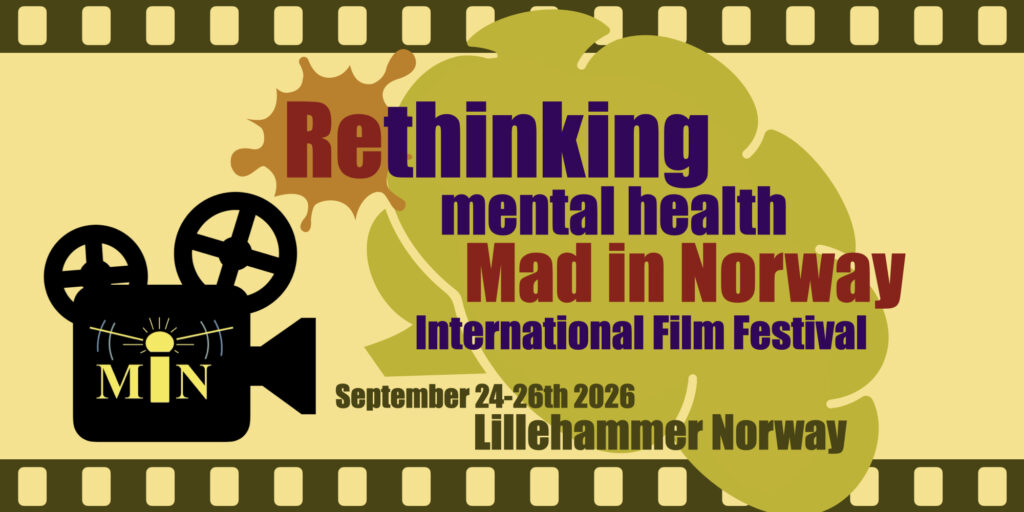
Rethinking Mental Health – Mad in Norway International Film Festival
is a meeting place where film will be used as cultural tools to explore and to share experiences, knowledge, and new perspectives on mental health problems and mental health care.
The festival is organized in collaboration with:
- Mad in America
- the broader Mad in the World network
- University of Inland Norway – Centre for Lifelong Learning (SELL)
- the Norwegian Nurses Organisation’s Professional Group for Mental Health and Addiction (NNO‑SPoR)
- the Norwegian TV – School, University of Inland Norway
- the Amandus Blikkfang Film Festival
The festival is organized with support from:
- Mad in America
- Lillehammer Community Development
- East Norwegian Film Centre
- White Eagle, Norway
- WSO – We Shall Overcome
The festival invites perspectives that are often given limited space in the public sphere: how human rights can be fully realized in the field of mental health, in line with United Nations and WHO guidelines; the experiences of people who have received psychiatric treatment; critical professional voices; alternative understandings of mental distress; and examples of good practice.
We hope the festival will help build relationships and strengthen ongoing efforts in public education and change within the field of mental health. We also hope it will bring greater depth to a public debate that is often characterized by simplified explanatory models and a strong consensus around diagnosis-based and medical approaches.
Above all, we believe it can offer hope and inspiration to everyone working to align mental health services with human rights and the recommendations of the United Nations and the World Health Organization.
Why a film festival?
Films bring people together. They have the power to change hearts and minds.
The films will serve as a starting point for reflection, exchange of ideas, and public dialogue on power, knowledge, human rights, and alternative approaches to the prevailing biomedical model of mental health.
Through documentaries, drama and experience-based films, the festival will convey knowledge, moving stories, and perspectives on mental health that are often difficult to express through text or traditional professional formats. Films create closeness to people’s life situations, foster emotional understanding, and provide a shared starting point for reflection and dialogue.
Screenings will be contextualized through conversations with filmmakers, professionals, and people with lived experience, contributing to a broader public discussion about mental health, power relations, and alternatives to current practices.
Previous film festivals
2014, Boston, USA
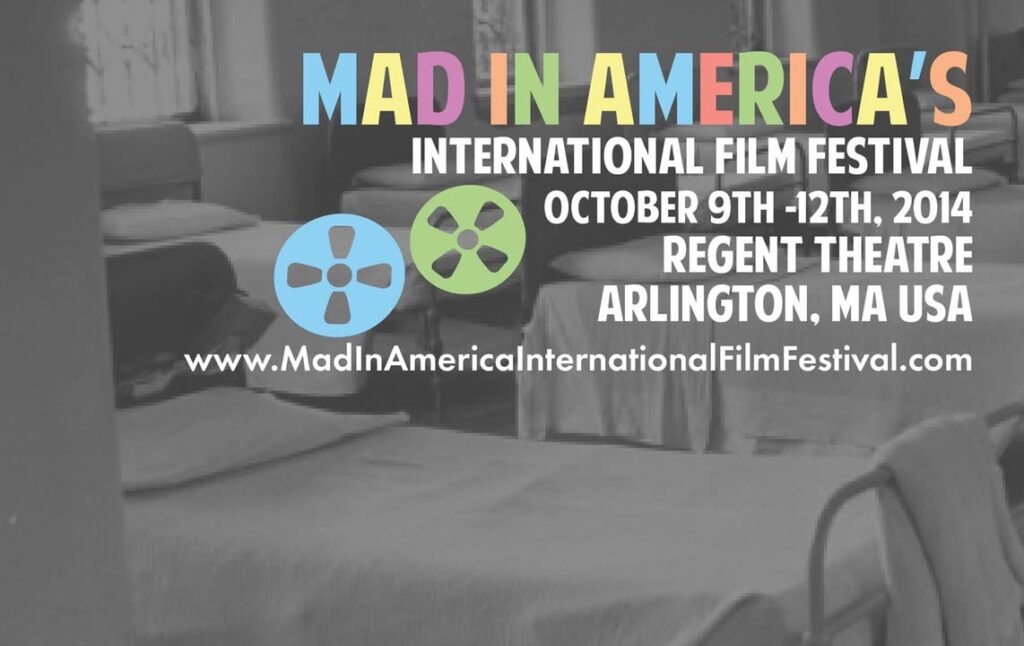
In 2014, Mad in America organized a four-day International Film Festival in Boston, featuring 30 films, 40 participants from eight countries, four panels, two artistic performances, and both opening and closing social events. The festival sold out, attracting an audience of people with lived experience, family members, mental health professionals, and academics from across the United States and more than a dozen other countries. The event concluded with a dinner, during which attendees repeatedly expressed that they felt part of a community working together to reform psychiatric care both nationally and internationally.
2015, Gothenburg, Sweden
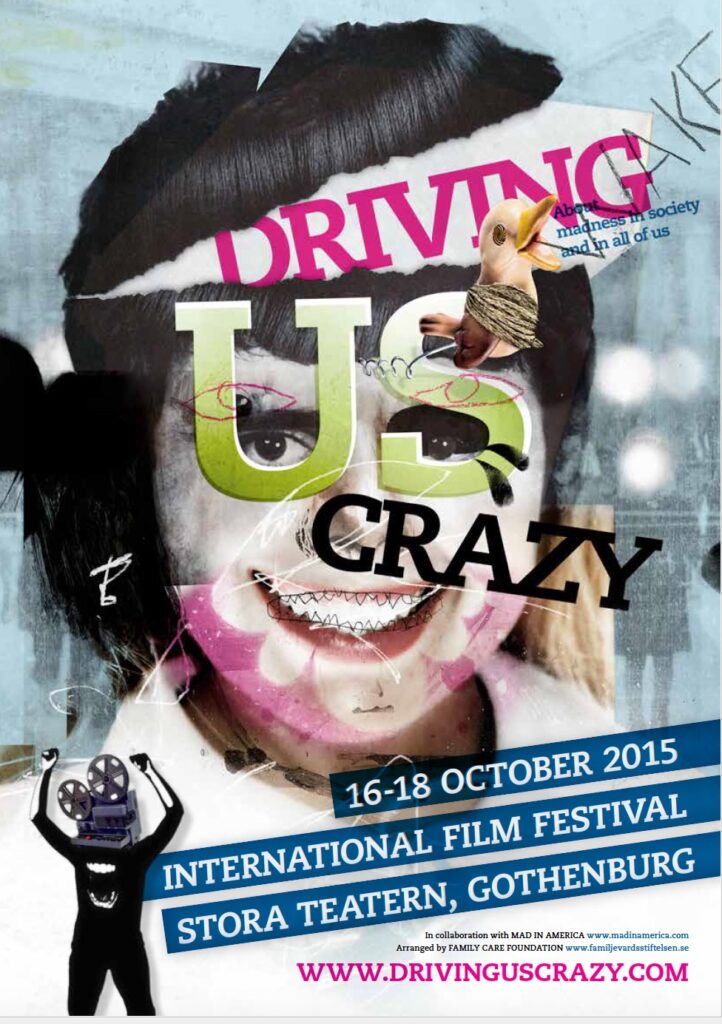
In 2015, a group from Sweden, led by Carina Haakansson and others inspired by the 2014 festival, organized an international film festival in Gothenburg titled Driving Us Crazy, with support from Mad in America. Like its predecessor, the festival featured an international lineup of films, panels, and appearances by directors, and attracted an audience from several countries, including the United States. Once again, attendees highlighted how the event fostered a sense of community and inspired them in both their work and their personal lives.
Feedback from the Audience (2015)
One visitor wrote:
“Incredible days with important films that gave hope.”
Another commented:
“The best thing I’ve ever experienced—both the films and the conversations, the meetings with others, and the realization that there are many of us with experiences different from those often described.”
The magazine Social Politik wrote:
“On the silver screen, we encountered people who had experienced mental health challenges—in stark examples of how traditional care can erode personalities, reducing individuals to lifeless packages without feelings or functioning intellect. Yet the lasting impression of Driving Us Crazy is one of hope, because we also saw many alternative approaches and methods, where people were placed at the center and their abilities and commitment were truly valued.”