
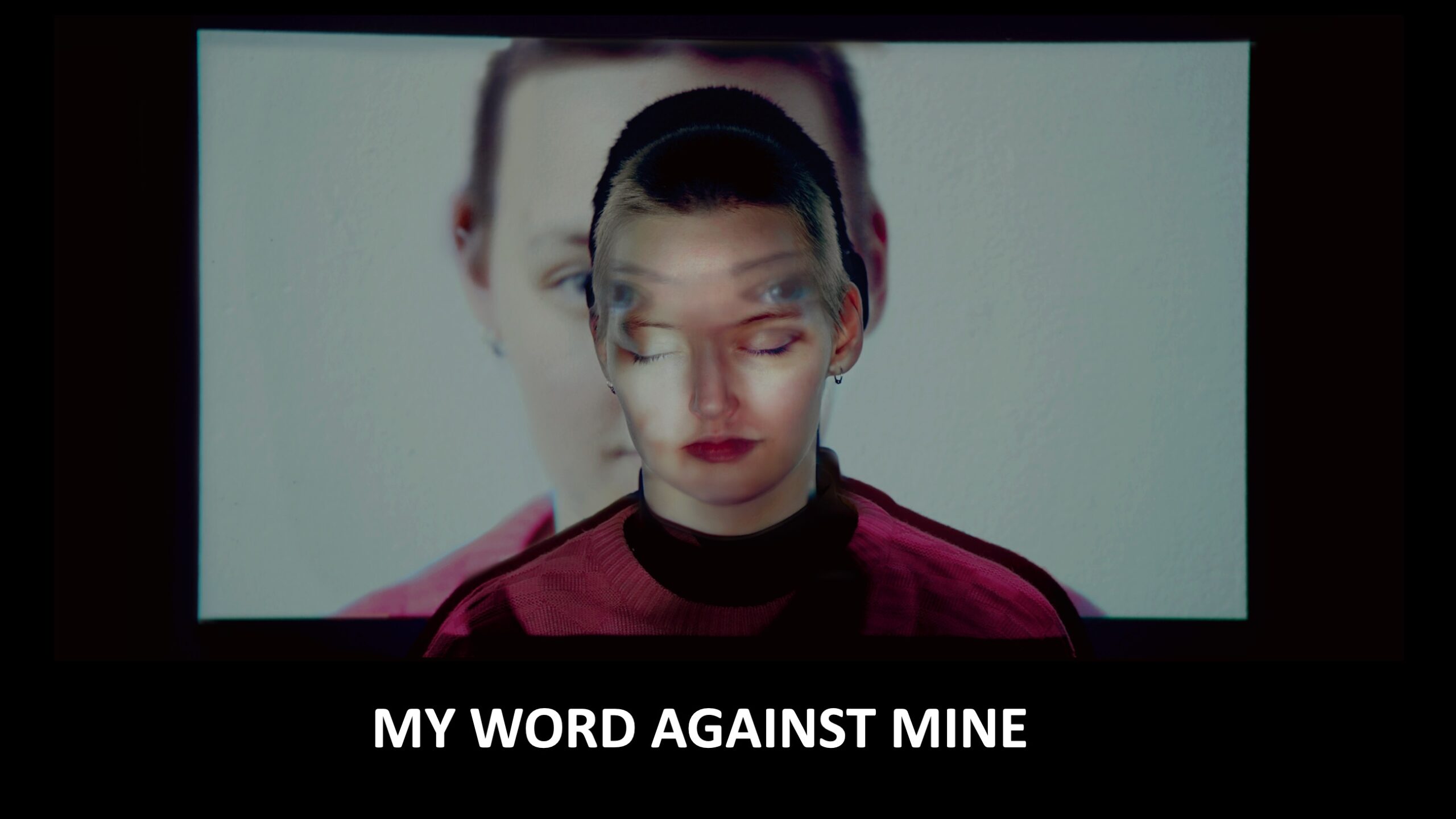
Documentary
2025 The Netherlands
113 minutes
Language: Dutch
Subtitles: English
Director: Maasja Ooms
The films website: https://mwthm.ceruttifilm.nl/
See also: https://www.ceruttifilm.nl/documentaires/mijnwoordtegenhetmijne/
Short synopsis from the producers website
How crazy are you when there are voices in your head that give you orders, and you can’t control them? Should you ignore them and suppress them with pills, or should you take them seriously? My word against mine delves into the minds of voice hearers who attempt to genuinely listen to their inner voices, hoping that this radically different approach will provide relief.
Summary
This Dutch production is a unique kind of documentary. With the exception of a few scenes showing the subjects in their everyday environments, the camera primarily focuses on each individual participant as they undergo therapy.
We are introduced to five patients who experience hearing voices and are receiving individual therapy to address their significant challenges. All describe the voices as holding secrets from the past—things that they are forbidden to say—and even secrets unknown to the patients themselves. Some voices are angry, threatening, and contemptuous, at times urging the person to take their own life. Others are more supportive, offering companionship and protection.
Throughout the therapeutic process, patients are encouraged to share what the voices are saying, and ideally to allow the voices to speak for themselves. Initially, the patients act as intermediaries between the therapist and the voices, carefully formulating responses by checking what is acceptable to say. As therapy progresses, some begin to let the voices speak directly, accompanied by noticeable changes in expression, language, and body posture.
Toward the end, the therapist works to negotiate with the voices—acknowledging their role while suggesting that they may no longer be needed—and helps the patients recognize that the voices are, in fact, parts of themselves.
The film is particularly compelling in its exploration of a largely taboo yet surprisingly common experience: we are told that around 10% of the world’s population hears voices, whether internally or externally. It also offers a profound look at the ways these voices have served as resources—providing support and protection through loneliness and severe trauma.
Several patients express affection, even love for their voices, stating that life would feel empty without them. This raises thought-provoking questions, especially given that psychiatric treatment is often focused primarily on symptom reduction. While that remains a goal here, it is approached with deep respect for the role the voices have played, and only in collaboration with the patient’s own readiness to let them go.