
Documentary
2020 USA
76 minutes
Language: English
Subtitles:
Directors: Lynn Cunningham and Wendy Ractliffe
Website: https://medicatingnormal.com/
Short synopsis from the films website
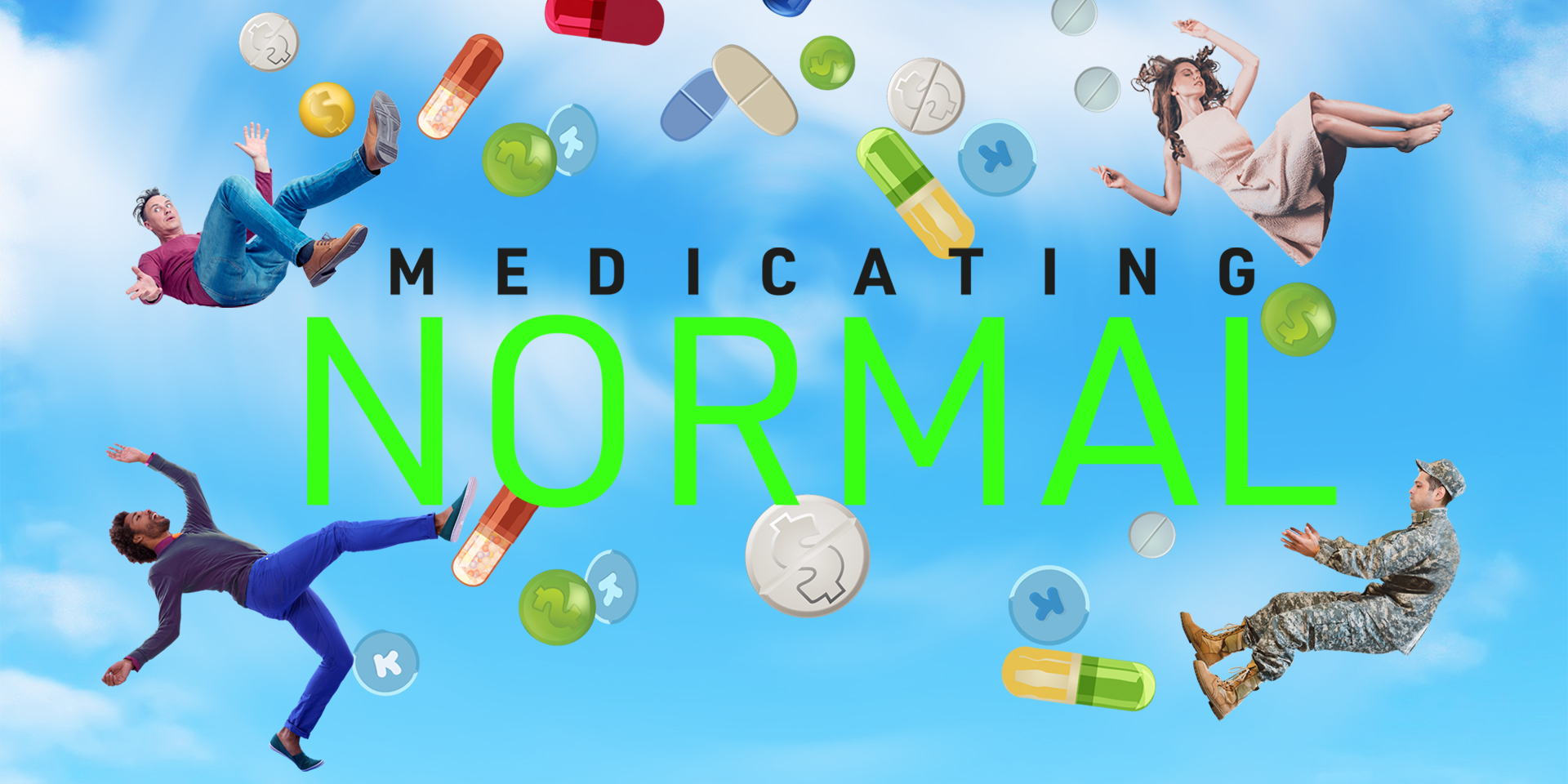
Millions of people worldwide are physically dependent on common psychiatric drugs. Although these may help some people in the short term, they also cause dangerous side effects and damage with long-term use, which drug companies have concealed from both doctors and patients. “Medicating Normal” follows a newlywed couple, a female war veteran, a waitress, and a teenager who were harmed by the drugs they thought would help them. This is the story of what can happen when profit-driven medicine meets people in crisis.
Summary
The film follows five individuals who share their experiences with psychotropic medications. What began as understandable reactions to trauma or life difficulties gradually developed into long-term psychiatric treatment, marked by multiple diagnoses and increasing use of medication. Over time, they describe a growing sense of emptiness, as their need for human connection, support, and security was primarily met with prescriptions rather than relational care. This leads to the central question: “What have these diagnoses actually given me?”
The documentary explores how psychiatric labels and medication can shape a person’s self-understanding, as well as the social and relational consequences of long-term drug use. It raises concerns about side effects—including an increased risk of suicidal thoughts—which, according to the film, are not always fully communicated to patients. It also criticizes prescribing practices, suggesting that medications are often given too readily and presented as largely harmless.
In addition, the film examines the role of the pharmaceutical industry, pointing to advertising strategies that emphasize short-term benefits while overlooking long-term effects. Journalist Robert Whitaker is featured as a key voice challenging the effectiveness of psychotropic drugs and highlighting issues such as research bias and industry influence.
Alongside these critiques, the film includes perspectives from professionals and showcases alternative approaches to treatment. It follows the participants as they begin to reconnect with their emotions, rebuild relationships, and engage in meaningful activities. Their recovery is portrayed as a gradual and challenging process, particularly when reducing medication. The concept of hyperbolic tapering is introduced as a safer method for discontinuing psychotropic drugs, emphasizing the importance of careful, individualized support.
Overall, the film presents a critical perspective on modern psychiatric practices while highlighting the importance of human connection, informed choice, and alternative paths to recovery.